
Value Proposition
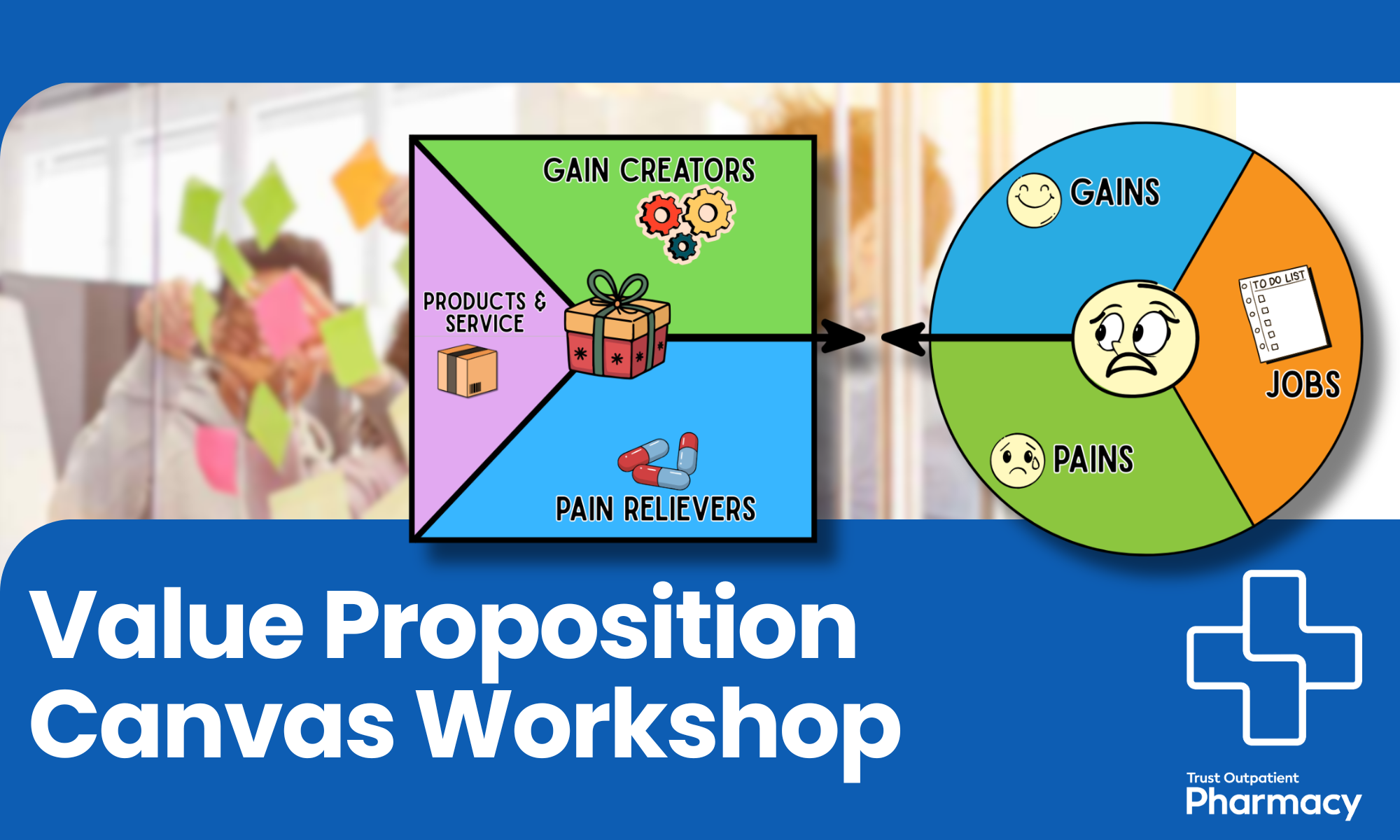
Pharm@Sea recently brought the team together for a value proposition workshop focused on how the pharmacy can better serve patients while also improving staff experience and performance. The session used a structured canvas to map out the day‑to‑day reality of work, the challenges staff face, and how current and future services – supported by the CRM – can relieve pain and create meaningful gains for everyone involved.
A value proposition workshop is a structured session where a team steps back from day‑to‑day work to clarify who their customers are, what those customers need, and how the service or product creates value for them. It typically uses tools like the Value Proposition Canvas to connect customer “jobs”, pains and gains with the organisation’s products, services and ways of working.
What we do in the workshop
In a typical value proposition workshop the group works through a series of guided exercises, usually on a shared canvas or set of templates. People identify customer segments, list key jobs they are trying to get done, and then capture the pains that make those jobs hard and the gains customers are hoping for.
The team then maps its products and services against this customer profile, describing specific pain relievers (how the service removes or reduces pains) and gain creators (how it delivers benefits and positive outcomes). Through discussion, clustering of ideas and prioritisation, the group refines which elements are most important and begins to shape a clear value proposition statement.
Purpose of the workshop
The main purpose is to create a shared, evidence‑based picture of “who we’re for and why we matter” so decisions aren’t based on assumptions or internal preferences alone. It aligns people from different roles around the same understanding of customer needs and how the organisation uniquely addresses them.
A second purpose is to surface gaps and opportunities: where current services don’t adequately relieve pains or create gains, and where new features, processes or support might be needed. This makes the workshop a practical input into service improvement, product development, communication and wider strategy.
What we gain from it
By the end of a value proposition workshop, teams usually leave with a clearer, more concise articulation of their value proposition that can be reused in planning, marketing, service design and stakeholder conversations. The process also builds alignment and buy‑in, because people have co‑created the picture of the customer and the offer rather than having it handed down to them.
Understanding our daily jobs
The first step was to list all of the core jobs that pharmacy staff carry out during a typical day. This ranged from clinical tasks such as checking, screening calculations, dispensing and booking prescriptions in, through to wider responsibilities like incident reporting, communication across sites, requesting and managing stock, and dealing with “where’s my prescription?” queries. The group also captured professional and operational duties such as RP responsibilities, lockdown tasks for GDPR and medicines security, OTC and public health services like smoking cessation, plus essential but often invisible work like cleaning. Seeing all of these activities together highlighted just how many moving parts there are in running Pharm@Sea safely and efficiently.
Mapping our pains
With the jobs in view, the team then explored the pains that make those jobs harder than they need to be. Duplicate prescriptions, multiple working platforms and fragmented communications were common themes, alongside recurring frustrations such as finding prescription locations, accessing batch expiry labels and chasing missing information. Staff also pointed to issues with traceability of scripts between Brighton and PRH, phones not being answered, misplacing labels, stock or prescriptions, and the constant pressure of patient waiting times and high workload. System problems like tills not working or Webtracker crashing, plus distractions and delays when prescriptions haven’t been sent, all add to stress levels and reduce time for focused clinical work.
Current and future services
Against this backdrop, the workshop reviewed Pharm@Sea’s existing products and services and where they sit within the customer experience. Today this includes medicines supply, counselling, deliveries and collections, flu jabs, OTC support, customer service and signposting, alongside emerging digital functions. Looking ahead, the group discussed opportunities such as Pharmacy First, enhanced training and development offers, travel clinics, health checks and specialised chemotherapy services. Framing these as part of the overall value proposition helped the team think about how each service can directly address identified pains or unlock new gains for patients and staff.
Pain relievers and gain creators
The discussion then shifted to practical ways to relieve pain and create value, with a strong link to how a better‑designed CRM and digital ecosystem could help. Pain relievers included more physical space, better prescription checks, ensuring correct and fully completed prescriptions, clearer annotations and robust stock management. Ideas such as digital receptionists, fewer logins, electronic prescriptions, AI‑supported phone handling and a patient portal for updates, texts and calls all point towards a more integrated CRM‑driven model. From these pain relievers flow gain creators: no lost prescriptions, faster processing, fewer errors, reduced stock wastage, less stress, clearer prioritisation, improved visibility and traceability, better patient experience and safety, and ultimately stronger company performance.


What we gain as a team
Finally, the workshop captured the gains that matter most to staff when the value proposition is working well. These include opportunities for experience and development, visible company support, lower stress levels and a happier workplace where people feel proud of the care they deliver. When processes run smoothly and tools like the CRM support rather than hinder, staff can focus on patients, leading to higher satisfaction, exciting new ventures and Pharm@Sea becoming an employer of choice. Job satisfaction, improved patient outcomes and a sense of shared purpose were recognised as the real measures of success for the value proposition and CRM work going forward.