
Pharm@Sea Hazard Workshops
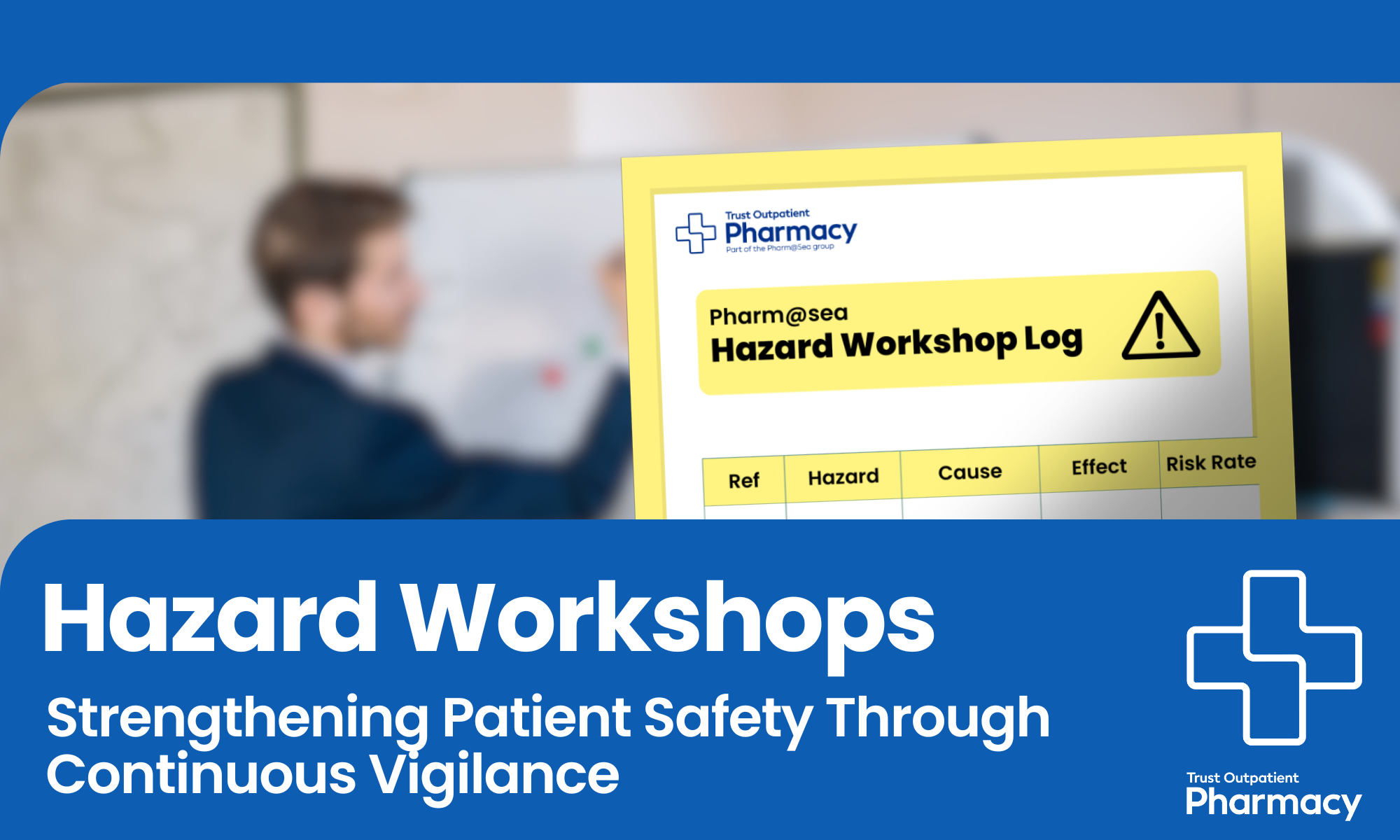
Pharm@Sea Hazard Workshops: Strengthening Patient Safety Through Continuous Vigilance
At Pharm@Sea, patient safety is at the heart of our work. Every process, from prescription to handover, is designed to deliver the safest, most reliable Pharmacy service possible.
Clinical Safety is a core element of the development of any health technology solution and is governed by the DCB 0129 and DCB 0160 standards set out by the NHS. As part of the Clinical Safety Case Report required for us to embed safety in our product, we are required to identify, assign a risk rating, and mitigate patient safety risks.
One way we embed this commitment is through our regular Hazard Workshops, collaborative sessions that form a cornerstone of our risk management culture. These workshops create space for pharmacists, technicians, and operational staff to identify, evaluate, and control potential hazards using a structured, evidence-based approach.
Why We Hold Hazard Workshops
Pharmacy operations involve multiple people, steps, and systems. That complexity, while necessary, can introduce risk. The Hazard Workshops ensure that every team member actively contributes to spotting and controlling those risks before harm occurs. This proactive method not only protects patients but also strengthens communication, consistency, and learning across teams.
A Structured, Collaborative Process
Each workshop brings together individuals across the development team including the project manager, clinicians, the developers, our technology officer and our clinical safety officer together to discuss the hazards. The sessions follow a structured format that ensures consistency, traceability, and accountability. The process starts with a dedicated Hazard Log, which acts as both a discussion guide and a living record of our thinking.
For every identified hazard, the team details:
- Description: What might go wrong?
- Cause: Why might it happen?
- Effect & Harm: What could be the consequence for the patient?
- Existing Controls: What safeguards are already in place to reduce the risk?
- Additional Controls: What further measures, design changes, training, or business process changes could prevent or reduce the risk of this hazard?
- Risk Rating: Each hazard is scored based on severity, likelihood, and an overall risk rating, supported by clear justification.
- Action Tracking: Once mitigation steps are agreed upon, we record who is responsible, what needs to be done, and how progress will be monitored.
This evidence-based approach ensures visibility, accountability, and traceability. It also helps assess how upcoming CRM functions might introduce or mitigate new risks.
Covering the Stages of the Pharmacy Workflow

The workshops systematically address hazards across the entire dispensing lifecycle, divided into six key stages. Each session focuses on a specific area, allowing for in-depth exploration and cross-team insight.
1. Prescription Booking-In Stage
This is the first step where prescriptions are received and entered into the system. At this stage, common hazards might include data entry errors, missing patient information, or delay in confirming medication availability.
During our workshops, we examine how these risks are currently managed, such as through double-check procedures, and consider how the CRM system can strengthen automation and visibility to reduce error potential.
2. Screening Process
Once booked in, prescriptions are clinically screened. Here, hazards could arise from incomplete patient history access, miscommunication of dosage adjustments, or missed drug interactions.
We discuss how CRM integration might streamline access to patient data or flags, ensuring better decision-making and minimizing screening oversights.
3. Dispensing Stage
Dispensing hazards typically involve labelling mistakes, stock picking errors, or misinterpretation of prescriber instructions. We explore how workflows and workspace layouts influence error rates and how CRM-driven barcode scanning, system alerts, and pick validation could provide additional safeguards.
4. Accuracy Checking Stage
Accuracy checking is a crucial safety net. However, human or environmental distractions can compromise this line of defence. During workshops, we reflect on current controls such as independent double-checking and discuss how CRM functionalities can support digital verification without disrupting established safety layers.
5. Handing Out Stage
The final handover to the patient or healthcare provider is where communication and verification matter most. Hazards include issuing medicines to the wrong person, inadequate counselling, or missing signatures.
Our teams identify ways CRM can strengthen compliance and accountability.
6. System-Level Hazards
Beyond individual stages, system-level issues, such as; software downtime, integration errors, or access control vulnerabilities, can affect the entire pharmacy process. By including these in our workshops, we ensure a holistic risk view that anticipates technology challenges before they arise.
CRM: Enabling Safer Systems
Our upcoming CRM system promises better coordination, data integrity, and workflow visibility. Yet new technology brings new risks. The workshops serve as a feedback loop between pharmacy operations and the CRM development team, ensuring that system design supports, not complicates safety.
If a potential hazard can be controlled through CRM functionality, like automated alerts or task escalation, it’s referred to the project team for integration. Likewise, if digital processes create new vulnerabilities, such as duplicate records or unclear permissions, they’re addressed through design adjustments, training, or revised processes before going live.
Regular Review and Follow-Through
What distinguishes Pharm@Sea’s Hazard Workshops is their continuity. Risk discussions happen every week, and actions are not closed until clear evidence supports completion. Each cycle follows a rhythm of review, reflect, resolve, maintaining focus and accountability even for complex, multi-departmental issues.
This regular follow-up ensures that improvements become embedded habits rather than temporary fixes.
Evidence-Driven Assurance
Every recommendation is supported by tangible evidence, from audit outcomes and staff feedback to CRM test results. Risk scores are documented with clear reasoning, providing a transparent audit trail for governance and quality assurance.
This approach gives leadership confidence not just in the numbers, but in the rationale behind every control and decision.
Turning Hazards into Improvements
Most hazard responses fall into three categories:
- Design: System layout, functionality, or equipment configuration.
- Training: Improving staff confidence and understanding of controls.
- Process: Adjusting workflows or communication steps to prevent recurrence.
By evaluating hazards through this three-lens approach, we strengthen not just safety controls but also our overall operating framework.
From Discussion to Action
Workshops translate directly into real-world change. Each agreed action is logged, assigned, and tracked through the risk register, with progress shared across management levels. This means every issue raised leads to a verifiable outcome, a clear indicator of how the program drives ongoing improvement.
Learning, Adapting, and Evolving
Analysis of workshop data often reveals wider trends, for example, repeated hazards linked to training gaps or workflow bottlenecks. These insights guide improvements to SOPs, training programs, and CRM design features. As a result, the process evolves continually, ensuring that lessons learned translate into sustainable safer practices.
Building a Culture of Safety and Trust

Beyond compliance, the workshops foster professional confidence and patient trust. Knowing that risks are continuously reviewed and verified reassures both staff and service users that safety is a shared responsibility, not a procedural checkbox.
As Pharm@Sea moves through its digital transformation, this vigilance ensures our CRM system advances safety and efficiency hand in hand.
Looking Ahead
In the months ahead, Hazard Workshops will remain central to our CRM rollout and refinement. Sessions will evolve to focus on real-world performance, ensuring that new features strengthen safety outcomes without introducing new risks.
Ultimately, these workshops signify more than meetings, they represent an ongoing commitment to learning, accountability, and safer patient care.
At Pharm@Sea, safety isn’t a one-off initiative. It’s our everyday practice, and our Hazard Workshops are where that commitment comes to life.